
The sky over Arizona still held the final colours of the day as the old road moved through the open landscape. The heat of the afternoon remained above the asphalt, even though the sun had already begun to disappear behind the low hills. For miles there was no other vehicle in sight. There was only the road, the desert and a horizon that seemed to move farther away with every mile.
Eventually, a small town appeared in the distance. It was little more than a handful of buildings arranged along a main street that had clearly seen busier decades. A faded motel sign leaned towards the road. An old service station stood behind sun-bleached pumps. Across from it, a diner glowed beneath a red neon sign that flickered whenever the evening wind became stronger.
Several motorcycles were parked outside. Their riders had chosen the same stop after a long day on the road. Inside, old photographs covered the walls: family cars from the 1950s, travellers posing beside fuel pumps, shopfronts that had disappeared years ago. A quiet soundtrack of country and early rock played above the conversations. Some guests were travelling towards California. Others had already seen the Pacific and were following the route back east.
For a while, it did not matter where anyone had started or how far they still had to go. Everyone in the room was connected by the same road and by the small rituals of a long journey: checking the next fuel stop, comparing weather reports, talking about unexpected detours and remembering the places that looked ordinary on a map but became unforgettable in person.
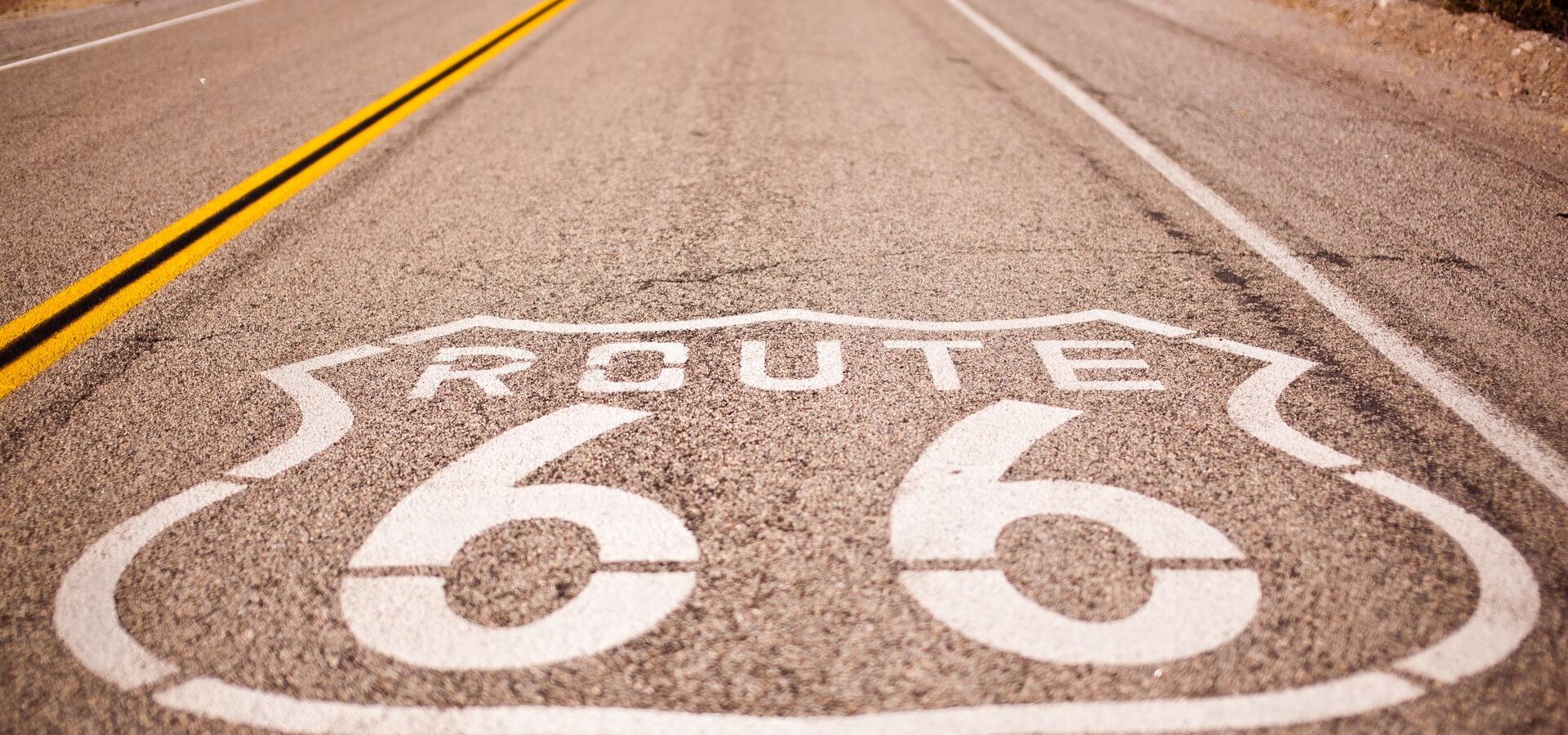
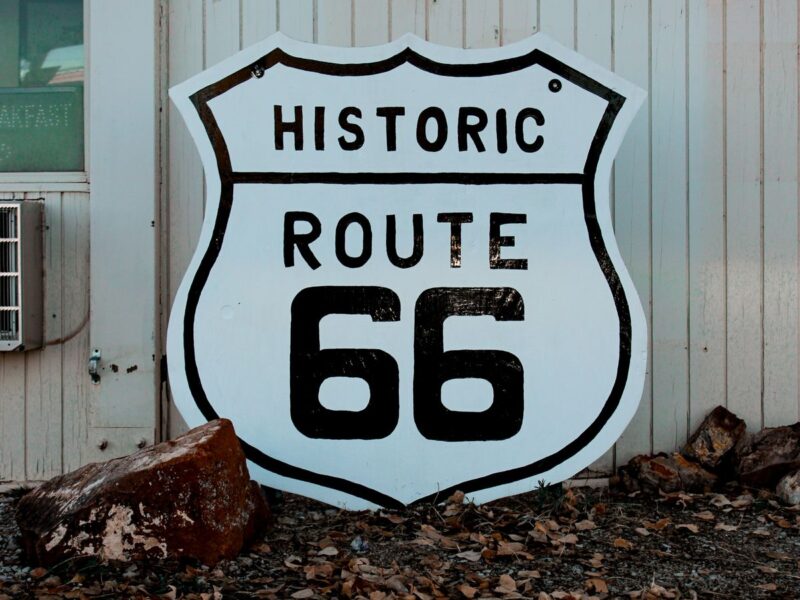
When the journey continued, the town quickly vanished in the mirrors. The light faded and the desert became a landscape of dark silhouettes. Then the familiar shield appeared at the side of the road: Historic Route 66. It was not larger or more dramatic than any other road sign, yet it carried the weight of millions of journeys made before this one.
That is where the appeal of Route 66 remains. It is not found only in famous landmarks or the number of states crossed. It lives in the quiet towns, the roadside conversations, the fading signs and the feeling of briefly becoming part of a much longer story of travellers moving west.